
Vase (no. 166)
Item
Title
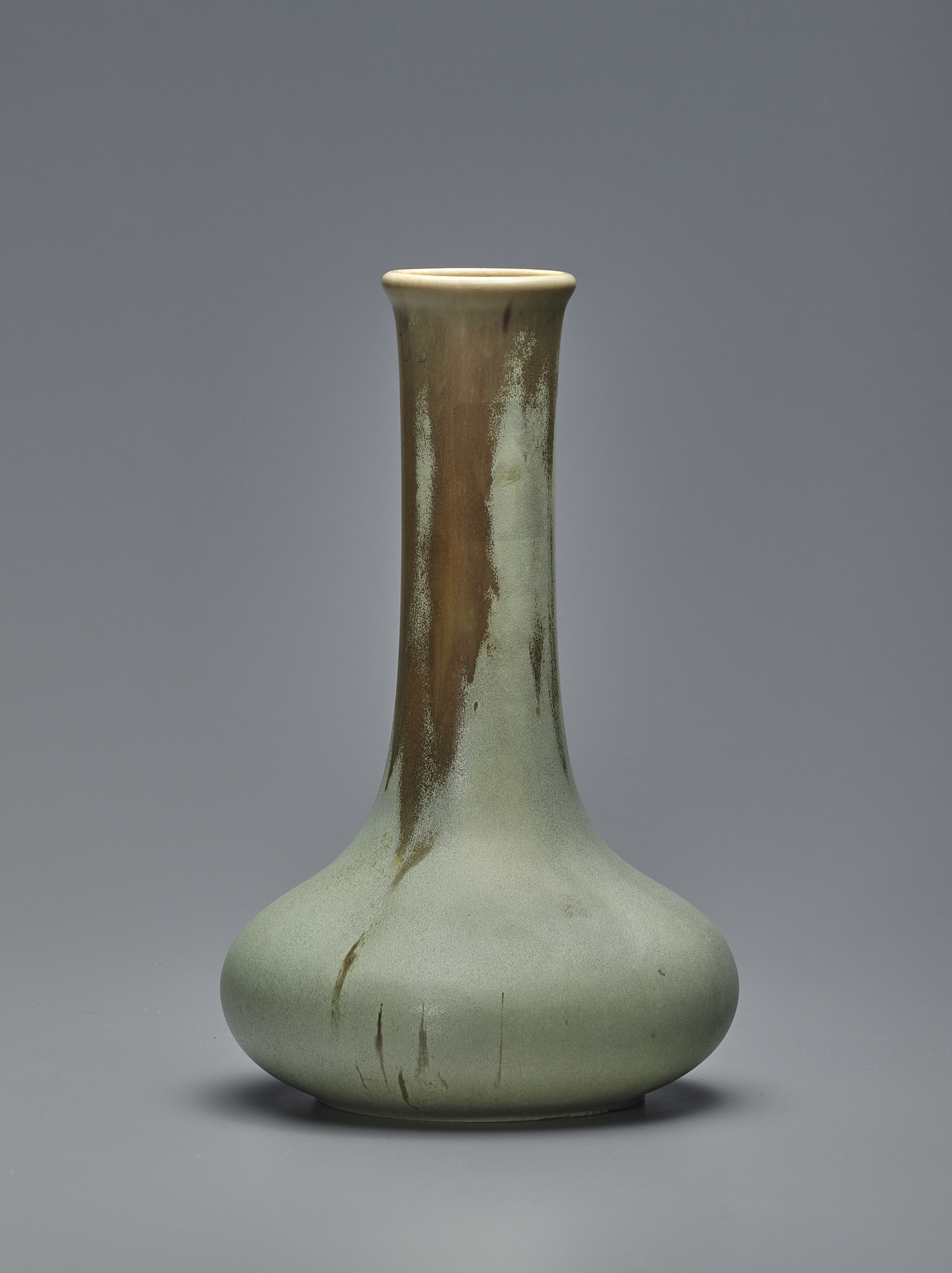
Vase (no. 166)
Creator
Clifton Art Pottery
Date
1905
Dimensions
8 3/4 x 5 inches
Medium
Porcelaneous stoneware
Object No.
2020.4.3
Credit line
Gift of Theodore M. Lytwyn
Marks
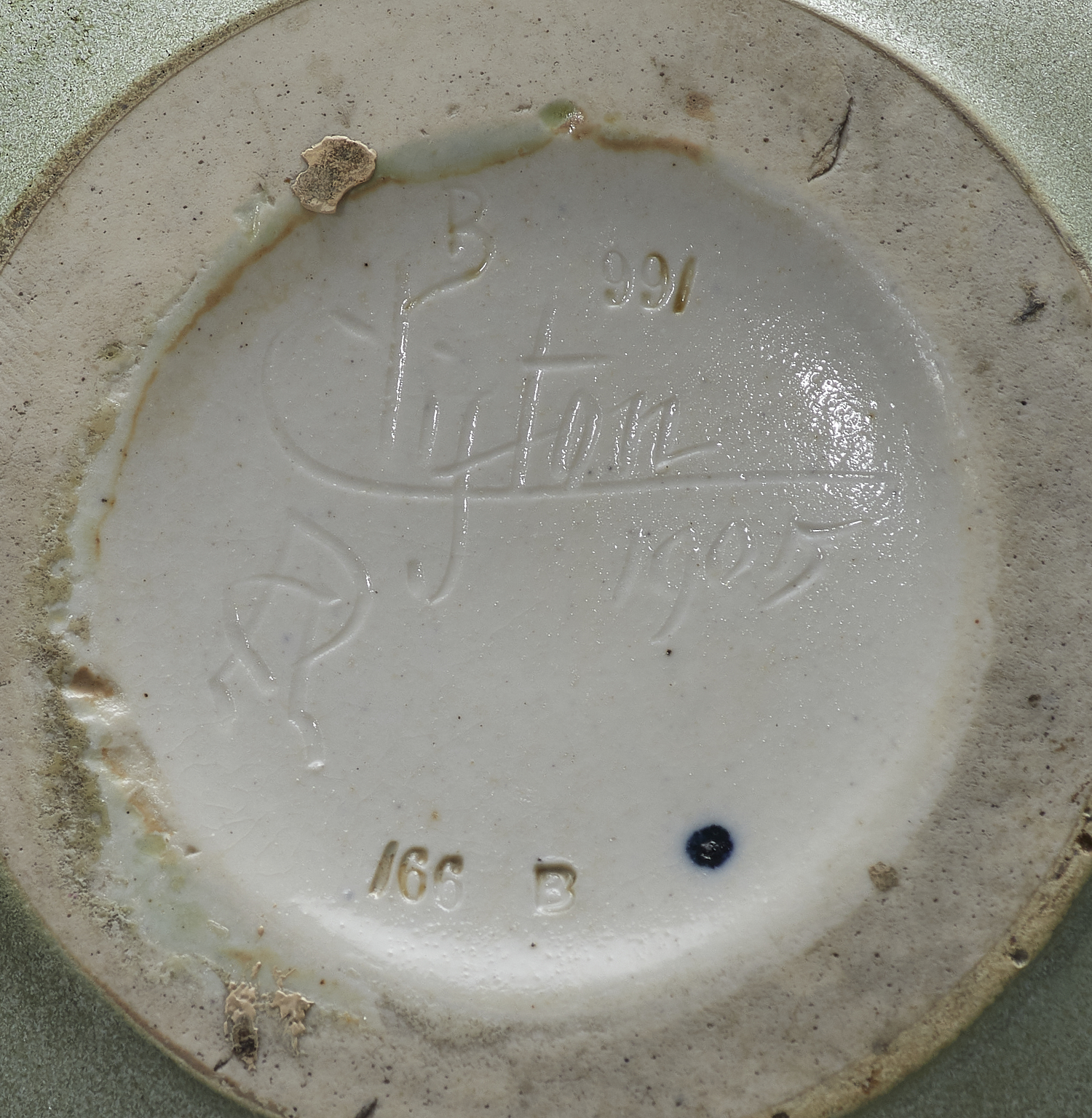
Impressed “166” (2x); impressed “B”; incised “B”; incised “Clifton / 1905”; illeg. Incised designer monogram
Description
Clifton Pottery produced a number of lines that—while technically proficient—were indebted to the stylistic trends of the moment, rather than innovative achievements that helped shape the emerging aesthetic. Clifton’s major lines—crystal patina, Indian pottery, and their Robin’s egg blue—reflected both the fascination with French matte crystalline glazes, and the rising interest in the Native American Art. This pattern—one of technical, if aesthetically uninspired, innovation—was evident throughout Long’s career, especially in his earlier development of Lonhuda ware, which was ultimately a derivative version of Rookwood’s standard ware. Even Long’s contemporaries were quick to notice his dependence on precedent. As an author in Keramic Studio noted about the firm’s display at the New York Society of Ceramic Arts in 1907:
Another unfamiliar name is that of the Clifton Pottery. The shapes are simple and good with semi mat glazes of the rutile brown type used by Mrs. Robineau, the light mat brown at top of pieces running into a bright glaze with violet and blue streaks and small mat crystallizations at the base. They also showed some mat light greens, shapes not so good as the others, the outlines being grotesque and with odd handles similar to the shapes used by Teco Pottery and some German firms.
In hindsight, it seems that Long’s indebtedness to precedent—both historic and contemporary—was partly responsible for the lack of financial success the firm found.
Another unfamiliar name is that of the Clifton Pottery. The shapes are simple and good with semi mat glazes of the rutile brown type used by Mrs. Robineau, the light mat brown at top of pieces running into a bright glaze with violet and blue streaks and small mat crystallizations at the base. They also showed some mat light greens, shapes not so good as the others, the outlines being grotesque and with odd handles similar to the shapes used by Teco Pottery and some German firms.
In hindsight, it seems that Long’s indebtedness to precedent—both historic and contemporary—was partly responsible for the lack of financial success the firm found.