COURSE DESCRIPTION
Edward Gardner Lewis and the story of University City Ceramics represent an undertaking so audacious that even with the benefit of hindsight it seems miraculous it came together at all and survived, if only briefly. Under Lewis’s leadership the transformation of 85 acres from a tent city that housed visitors to the St. Louis World’s Fair into a functioning city with world-class art academy was accomplished in less than a decade. Certainly a publisher, undoubtedly an entrepreneur, and quite possibly a charlatan (depending on who was asked) Lewis convinced three of the most important living ceramists–Taxile Doat, Adelaide Alsop Robineau, and Frederick Hurten Rhead–to join forces in St. Louis. Under the name “The People’s University,” Lewis–through sheer will and clever funding–breathed into existence a correspondence school in ceramics whose talented principals would not even own the pieces they made during their tenure.
It is a remarkable moment in American ceramics history that brought together remarkable talent and technical knowledge which would help shape and advance ceramics curriculums across the nation. Equal parts daring and preposterous, Lewis never thought small: he arranged for Doat to bring with him pots that would form the nucleus of an important museum collection. And, like Lewis’s fortunes, in the blink of an eye it evaporated. The ceramic school that brought together Rhead, Robineau, and Doat was soon in receivership, lasting long enough for petty rivalries and jealousies to fully derail what should have been a momentous undertaking. Doat alone survived the turmoil, and from 1912 to 1914 tried to make facilities a functional pottery that could sustain employees. With his contracts ending and World War One breaking out, he returned to France where–despite being tempted by Lewis’s next project–he remained for the rest of his life.
And yet, the work continues to speak volumes about the talent brought together in this school and the potential it held. In this series we’ll dive deeply into the University City project over the course of six weeks and learn about Lewis and his dream while examining the life and careers of the principals. We’ll cover in depth names you may know–like Frederick and Agnes Rhead and Adelaide Robineau–examining the developments in their careers that led them to University City, the work they accomplished while here, and the impact it had on later work. And we’ll also look at the work of less familiar names–like Emile Diffloth, Eugene Labierre, and Kathryn Cherry–to give a more complete picture of the pottery than often offered. Lastly, we’ll look at Taxile Doat, exploring his rise to prominence in late 19th century America, the lasting fame he achieved throughout the first decade, and the mark he left through his work at University City.
ABOUT THE INSTRUCTOR
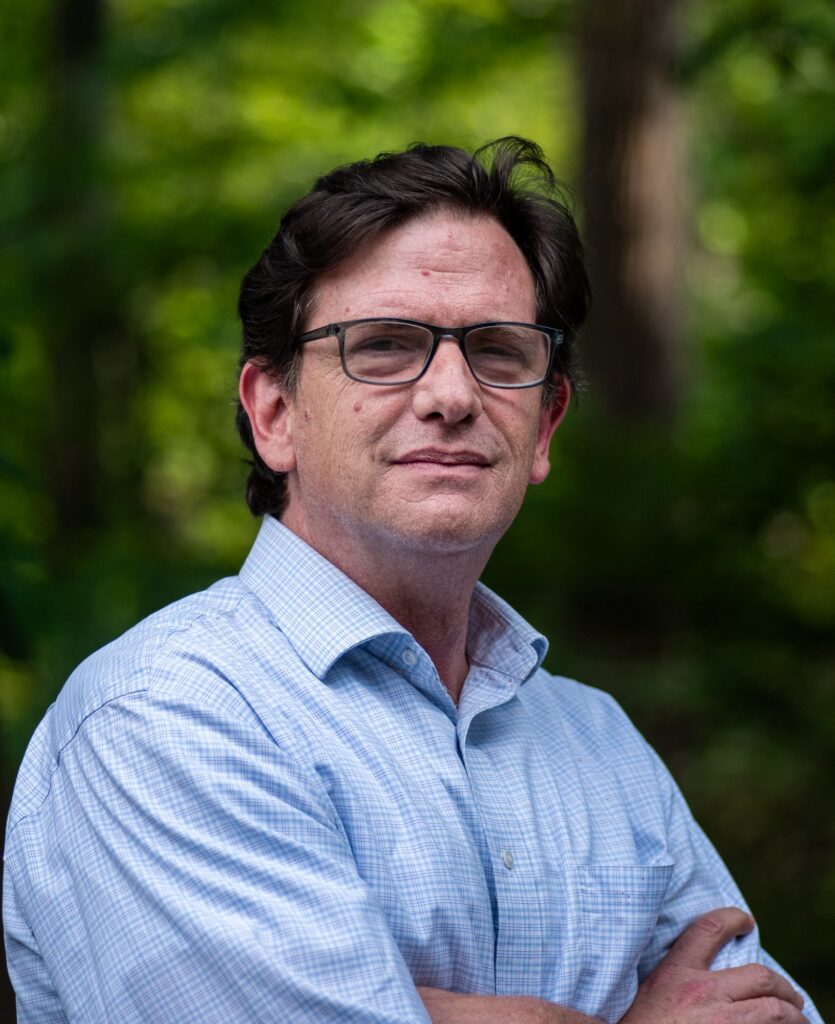
Dr. Jonathan Clancy has been the Executive Director at the Stickley Museum at Craftsman Farms since 2025 and on staff since 2020. Those interested in the Arts and Crafts field will know his publications including: The First Metal—Arts & Crafts Copper, These Humbler Metals: Arts and Crafts Metalwork from the Two Red Roses Foundation Collection, Beauty in Common Things: American Arts and Crafts Pottery from the Two Red Roses Foundation as well as articles for The Journal of Modern Craft, Style 1900 and Journal of Design History. Other contributions include chapters and articles on topics ranging from Studio pottery after World War II, American trompe l’oeil paintings of money, and John Singleton Copley’s Watson and the Shark. He is currently co-authoring a catalog on European ceramics for the St. Louis Art Museum and contributing to a planned exhibition on French ceramist Taxile Doat. His article on the ceramic collection of Gustav Stickley for the journal Ceramics in America will appear later this year.
University City Ceramics: A Fresh Look
A La Carte
Member Price: $30 / session
Non-Member Price: $35 / session
Full Course
Member Price: All 6 sessions for $150 (one session free)
Non-Member Price: All 6 sessions for $210
Registration is required. Once registered and paid, you will receive an email prior to each session with a link to join.
Do you have a scheduling conflict for the live session? You can still enjoy the program. Register and we’ll send you the recording! All paid attendees will be emailed a private link to the session recording when it is available, typically 6-7 days after the live program.
Missed us? You can also register retroactively. If you register for a session that has passed, you’ll receive access to the recording when it is ready.
Haven’t tried a session yet? Each session is planned as a “stand-alone” lecture, so you can take them all or attend the topics that interest you most.
| 1 | Sat., March 14, 2026 at 1:00 P.M. EDT | Session One: March 14 Big dreams and bigger debts: the unlikely story of University City Even today, Edwin Gardner Lewis’s ability to pull off a venture as improbable as University City and bring together Taxile Doat, Adelaide Robineau, and Frederick Hurten Rhead into a single school engenders a certain amount of grudging respect from his most ardent critics. A wildly unsympathetic protagonist, Lewis seems endowed with a preternatural ability to talk himself out of almost any problem. To his defenders he was the victim of malicious prosecutions by corrupt politicians and people in power, a charge which eventually proved true and helped earn him multiple acquittals. To his critics, he was a confidence man, a promoter of pyramid schemes, a smooth-talking deceiver who bilked thousands out of perhaps millions of dollars. To us? We’ll just have to see where we land. So what was University City and The American Woman’s League? How does one even afford to hire the most talented ceramists of the day, and–perhaps even more significantly–why were Edward and Mabel Lewis convinced a correspondence ceramics class would work? In this session we’ll take an unvarnished look at Lewis, examine the small surviving corpus of ceramics he and his wife made, and explore in depth how this Art Academy was formed and the degree to which it broke almost every norm. |
| 2 | Sat., March 21, 2026 at 1:00 P.M. EDT | Session Two: March 21 The Supporting Cast: Diffloth, Labierre, and Kathryn Cherry At University City a two-tier system was in place from day one which dictated the amount of time you were able to dedicate to your own work, versus that which was required for teaching. Emile Diffloth, Eugene Labarrière, and Kathryn Cherry were among the staff that devoted their time almost exclusively to teaching. For Diffloth and Labarierre, this fostered a deep sense of resentment that fanned the flames of jealousy towards Doat and Robineau in particular. So intense was their dislike that they left prior to the end of the first year. For her part, Kathryn Cherry seems to have been the most level-headed of the group. An enourmously talented China Painter, she survived the temperamental Frenchmen, the collapse of the Art Academy, and remained at University City until 1914. This session will cover the careers of Diffloth and Cherry in particular–Labarierre is more elusive–to explore what brought them to University City, and why their talents were in demand. Tracing Diffloth’s time in Sevres with Optat Millet through his career at Boch Freres in La Louviere, Belgium shows glimpses of a remarkable talent for artistry and chemistry. Similarly, Cherry’s reputation prior to her arrival, and new revelations about her teaching and exhibitions show the degree to which she was the perfect pairing with Robineau. Significant too were their careers after they departed as they reinforce the lessons drawn from their time in University City and underscore its importance. |
| 3 | Sat., March 28, 2026 at 1:00 P.M. EDT | Session Three: March 28 America’s favorite Englishman: Frederick Hurten Rhead Preternaturally talented and–if his surviving correspondence is any indication–amongst the most decent people one could hope to meet, Frederick Hurten Rhead was an important part of the University City program. Surprisingly (with the benefit of hindsight) he lacked the star power of the Robineau and Doat, despite the high regard with which he is held today. Unlike either of the masters, Rhead was expected to split his time between teaching and creating objects that would bolster the reputation of University City. Rhead brought an exceptional level of professional knowledge to University City, and his text was among the most important guides for early ceramists looking to understand process. It served almost as a practical counterpoint to Doat’s Grand Feu Ceramics, a reliable guide that walked one through the steps of making pots and even featured photographs. Rhead’s work at University City–from his Peacock tiles, to fireplaces, to vases–was amongst the most innovative and progressive pottery created in America during the Arts and Crafts period. |
| 4 | Sat., April 11, 2026 at 1:00 P.M. EDT | Session Four: April 11 The Robineaus and University City In hindsight, so rapid was her transformation it can appear as though Adelaide Robineau willed herself into a successful ceramist. Initially a China painter, then a publisher, and finally an artist in porcelain, Robineaus rapid rise to prominence was a testament to the strength of Keramic Studio–the monthly published by her and her husband Samuel–and of her work that was illustrated therein. It was the Keramic Studio Publishing Company that took Taxile Doat’s serialized articles, and in 1905 issued them as book, effectively starting a transformation in American ceramics. It is a miracle that Robineaus masterpiece, the Scarab Vase–which because of her contract she did not retain ownership of–survived its time in the kiln, the tumultuous downfall of University City, and wound up at the Everson Museum of Art where you can view it today. One might think that working alongside Doat–the man literally responsible for much of her technical knowledge–would have been the apex of her career, but the legacy and impact of University City on Robineau was more complicated. In this session, we’ll track her rise as a ceramist, explore the works created at University City, and think through its eventual impact on her later career. |
| 5 | Sat., April 18, 2026 at 1:00 P.M. EDT | Session Five: April 18 Sèvres, Art Pottery, and the Making of Doat Taxile Doat was a force. Remarkably talented as a draftsman and equally comfortable with the chemistry and experimentation required for ceramic innovation, he rose quickly through the ranks to become the premiere artist at Sevres. Along the way he gained admirers in France and abroad–his works were widely known throughout Europe and even sought by American buyers in the late 1880s–but also detractors. His decision to publish what many considered the trade secrets of Sevres (first in Keramic Studio and later as Grand Feu Ceramics) would lead to his dismissal from the firm and his eventual move to the United States, lured there by the promise of a fabulous salary and untarnished admiration. In this session we’ll explore the rise and making of Doat. From his work at Sevres, to that from his own kiln, including the more than 170 pieces he saved from this part of his career. These are of particular importance as he agreed to bring them to St. Louis, sell them to Edward Lewis, and for the start of a museum the likes of which (he claimed) was previously unknown in the United States or abroad. |
| 6 | Sat., April 25, 2026 at 1:00 P.M. EDT | Session Six: April 25 Taxile Doat: University City and Beyond From his arrival in St. Louis in 1909 to his departure in 1914, Doat remained enthusiastic about the prospect of American ceramics, even as Lewis’s fortunes faltered and the Art Academy he worked so hard to bring to fruition crumbled around him. This session will explore the two phases of University City pottery: The Art Academy of the People’s University (and the work Doat made for this and the American Woman’s League) and the later University City Porcelain Works, a commercial operation that lasted from 1912-1914. We’ll examine Doat’s works, as well as his words through letters preserved in archives in St. Louis and Philadelphia among other places. Tracing Doat’s eventual return to France as the first World War broke out, we’ll also look at the connections he kept to University City. To round out his remarkable career, we will also look at how his work evolved upon his return to France, the impact of his teaching on American ceramics, and I can share some news about an upcoming exhibition. |
A La Carte
Member Price: $30 / session
Non-Member Price: $35 / session
Full Course
Member Price: All 6 sessions for $150 (one session free)
Non-Member Price: All 6 sessions for $210
MORE INFORMATION
Craftsman Farms, the former home of noted designer Gustav Stickley, is owned by the Township of Parsippany-Troy Hills and is operated by The Stickley Museum at Craftsman Farms, Inc., (“SMCF”) (formerly known as The Craftsman Farms Foundation, Inc.). SMCF is a 501(c)(3) not-for-profit organization incorporated in the State of New Jersey. Restoration of the National Historic Landmark, Craftsman Farms, is made possible, in part, by a Save America’s Treasures Grant administered by the National Parks Service, Department of the Interior, and by support from the Morris County Historic Preservation Trust, The New Jersey Historic Trust, and individual donors. SMCF received an operating support grant from the New Jersey Historical Commission, a division of the Department of State and a grant from the New Jersey Arts & Culture Recovery Fund of the Princeton Area Community Foundation. Educational programs are funded, in part, by grants from the Arts & Crafts Research Fund.